Río Grande, Puerto Rico
The Yunque House
Residential Design | Architecture, Landscape and Interior Design






A modern casa de campo—one that embraces the terrain.
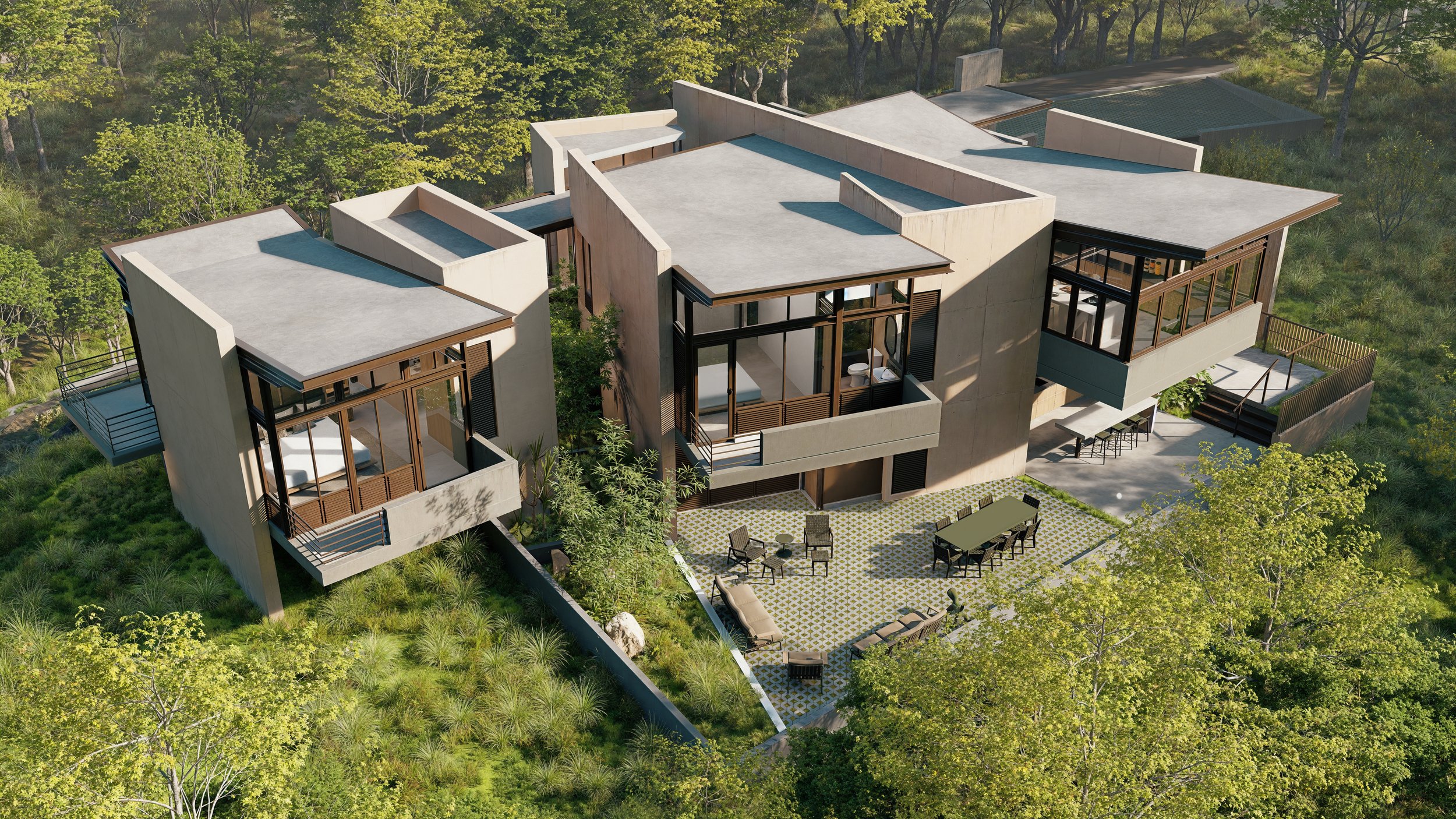
High in the foothills of El Yunque, where mist settles into the canopy and the sound of water becomes a daily rhythm, The Yunque House emerges as a contemporary retreat deeply rooted in Puerto Rico's rainforest landscape. Designed by LouisAmy AE Studio, the residence was conceived as a modern casa de campo—one that embraces the terrain, climate, and natural systems rather than resisting them.
Perched on a steep hillside, the home unfolds as a series of low, horizontal volumes stepping down the slope, each opening toward panoramic views of the forest. Board-formed concrete walls, deep overhangs, and operable wood screens provide shade, privacy, and hurricane resilience, while expansive glass dissolves the boundary between indoors and out. The result is a house that feels sheltered yet open, grounded yet expansive—an architecture shaped by place.
Every decision we make is shaped by a clear sense of purpose.
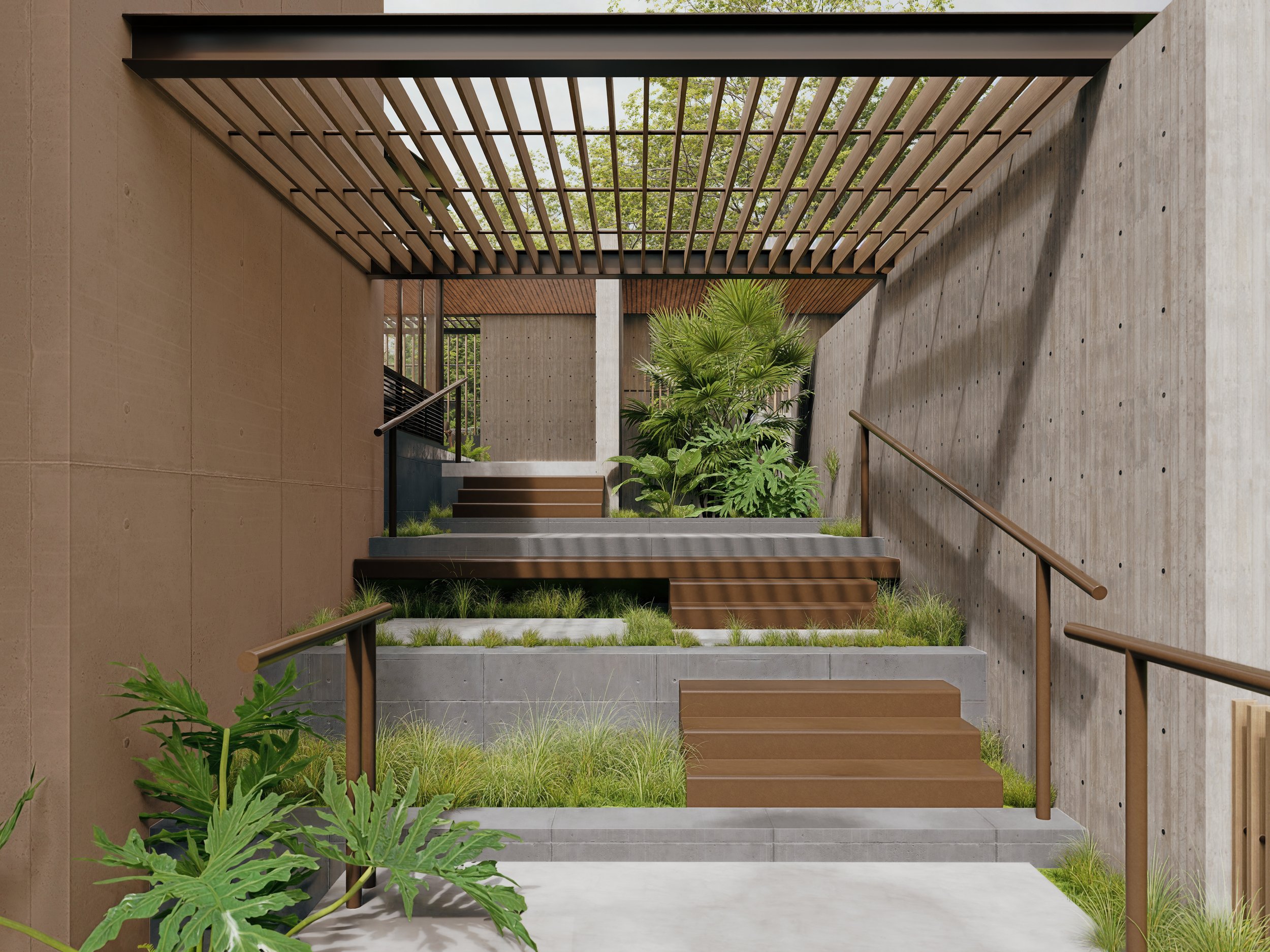
Approaching the house is a gradual experience. A narrow drive winds through dense vegetation before the architecture reveals itself—not as a singular object, but as a sequence of terraces carved into the hillside. Rather than sit above the landscape, the house aligns with it, allowing the forest to remain the dominant presence. From the entry, sightlines extend straight through the living spaces to the mountains beyond, anchoring the home visually to its surroundings.
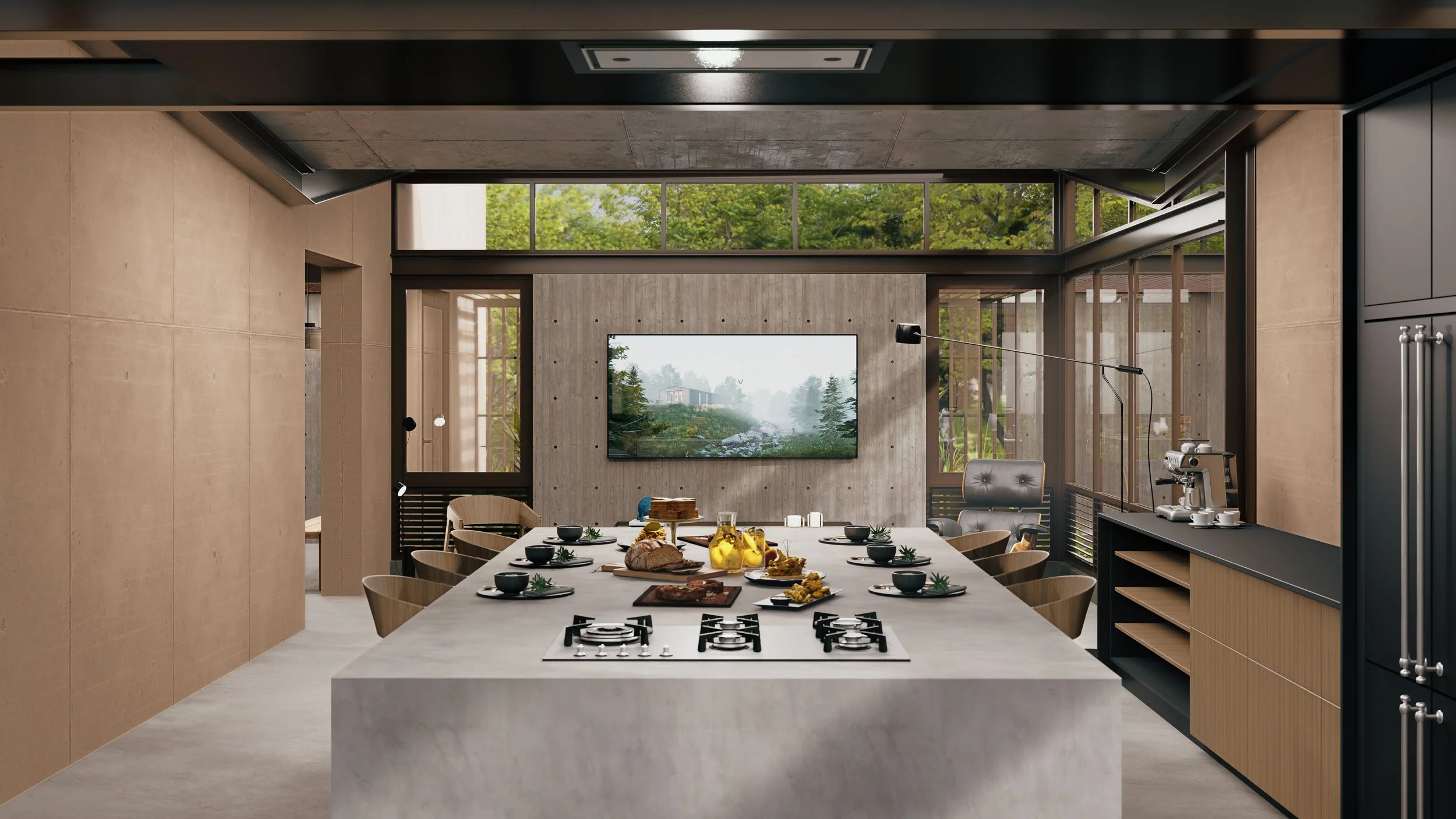
Inside, the plan is deliberately open but carefully zoned. Social spaces flow along a linear axis, where the kitchen, dining, and living areas connect seamlessly to outdoor terraces. Sliding glass walls retract completely, turning interior rooms into shaded extensions of the forest canopy. Bedrooms are positioned for privacy, each opening to its own garden or covered balcony, reinforcing the sense that every space belongs to the landscape.
Material choices are restrained and tactile. Cool polished concrete floors contrast with warm tropical hardwoods used for ceilings, screens, and built-in furniture. Board-formed concrete walls retain the imprint of their construction, echoing the texture of tree bark and grounding the architecture in its making. Passive strategies—cross-ventilation, deep overhangs, and strategic orientation—reduce reliance on mechanical systems while enhancing comfort.
At dusk, as the light softens and the forest darkens, the house becomes a quiet refuge. Interior spaces glow gently behind wood screens, and the sounds of El Yunque take over. The Yunque House is not defined by spectacle, but by balance—between shelter and exposure, modernity and tradition, architecture and rainforest.


